
Turtles
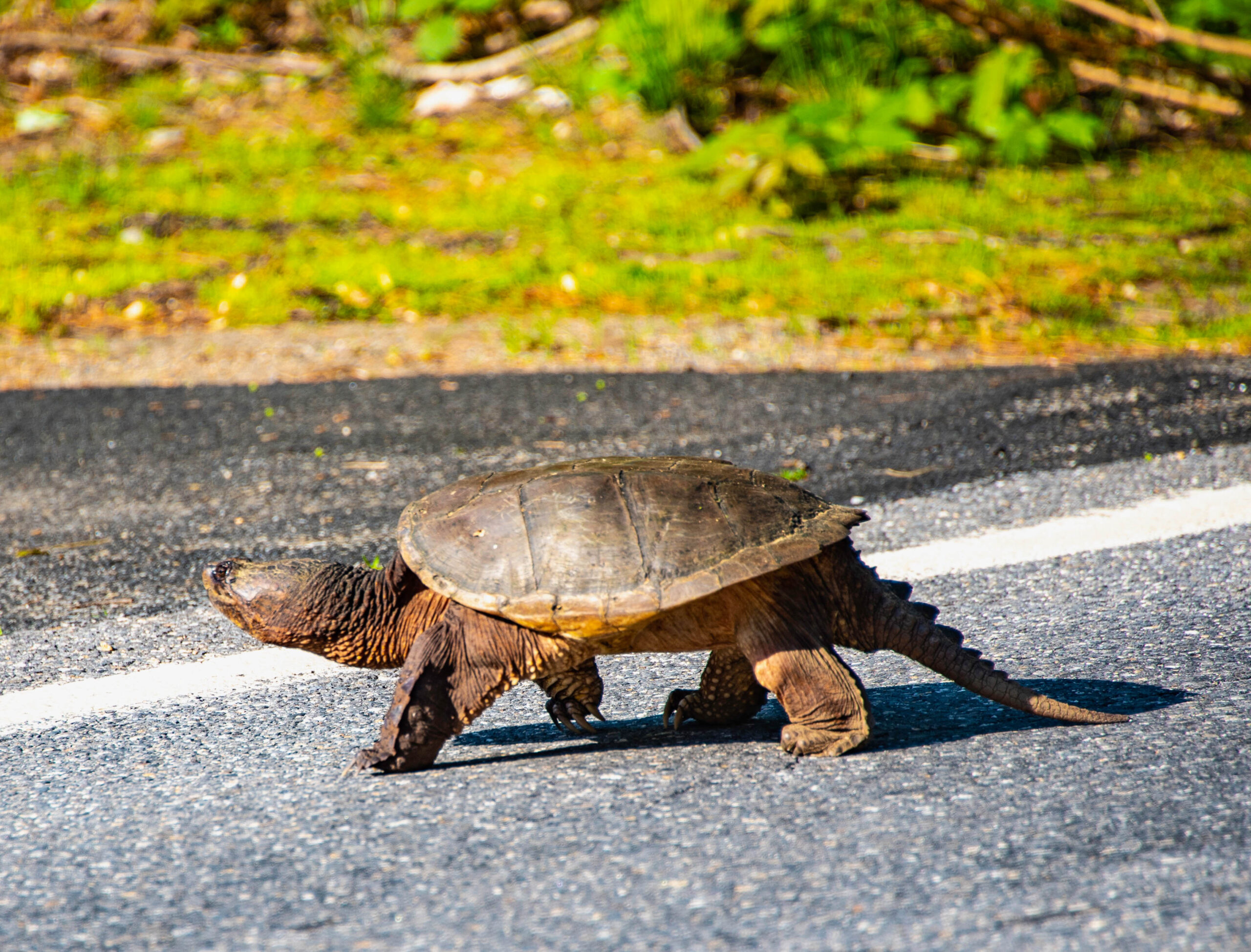

The common snapping turtle (Chelydra serpentina) is one of North America’s most iconic freshwater reptiles.
Known for its prehistoric appearance and powerful presence, this large turtle belongs to the family Chelydridae and thrives in a wide range of aquatic environments, including rivers, ponds, lakes, and wetlands.
Its natural range spans much of the continent, extending from southeastern Canada westward to the edge of the Rocky Mountains and south through the eastern United States, reaching as far as Nova Scotia and Florida.
 Notably, the present-day population of Chelydra serpentina in the Middle Rio Grande indicates that the species has occupied this drainage since at least the seventeenth century, strongly suggesting it is native to the region rather than a modern introduction.
For photographers, encounters with the common snapping turtle offer a compelling opportunity to capture a species that embodies resilience, adaptation, and deep ecological history—an enduring reminder of the wild character still present in our freshwater landscapes. I captured these Snapper images during the nesting season.
In Massachusetts, where I photographed the snappers shown in this post, snapping turtle nesting season typically occurs from late May through June, with peak activity in early June. During this time, adult females leave the safety of ponds, lakes, and wetlands to seek out warm, sunny locations—often in yards, fields, road edges, or sandy soils—where they can lay their eggs.

It is not uncommon to encounter snapping turtles crossing roads or appearing in unexpected places during nesting season.
While these encounters can be striking photographic moments, it is essential to avoid disturbing the animals.
If a turtle is in immediate danger on a roadway, it may be carefully guided in the direction it was already traveling.
For snapping turtles, a long-handled broom or similar object can be used to gently encourage movement.
Never attempt to relocate a turtle far from its nesting area, as this can disrupt its natural behavior and reduce the chances of successful reproduction.
Eggs typically hatch from late August through September, when tiny hatchlings emerge and make their first journey toward nearby water.
These brief seasonal movements highlight a critical and vulnerable stage in the snapping turtle’s life cycle—one that underscores the importance of awareness, patience, and respect when sharing landscapes with wildlife.